
In modern automation systems, machines are becoming faster, more compact, and more demanding than ever before. CNC machinery, robotic systems, servo motors, and automated production lines all rely on continuous movement. While many companies focus heavily on motors, controllers, and software, cable performance is often underestimated.
Until failure happens.
In many industrial environments, the real cost of cable failure is not the cable itself. The biggest cost is unexpected downtime.
A damaged drag chain cable can stop an entire production line, interrupt signal transmission, affect servo control stability, and create significant maintenance costs. In high-speed manufacturing environments, even short interruptions can result in major production losses.
This is why selecting the right drag chain cable is essential.
Unlike ordinary cables, drag chain cables are specifically designed for continuous flex applications involving repeated bending, torsion, and constant movement. They must maintain stable electrical performance even after millions of flex cycles.
However, not all “flexible cables” are truly suitable for drag chain systems.
Many standard PVC cables may initially appear flexible, but over time they can become stiff, crack under repeated motion, or experience conductor breakage. This is especially common in automation systems with high acceleration, small bending radius, or continuous operation.
For demanding industrial environments, cable structure and material selection become extremely important.
At AEIN, we focus on industrial cable solutions designed for automation systems, robotics, and continuous motion applications. Our drag chain cable products are developed to provide: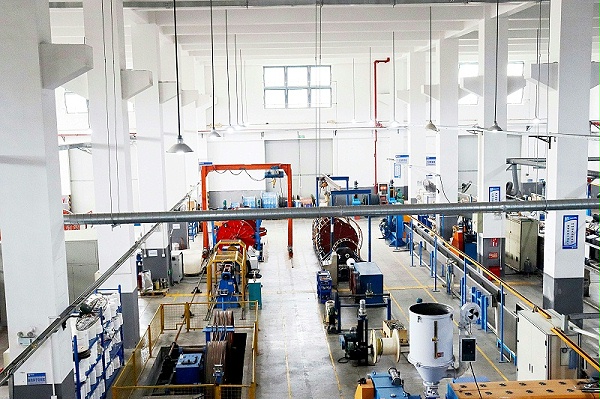
High flexibility
Excellent abrasion resistance
Stable signal transmission
Oil resistance
Long service life in continuous flex environments
For modern automation equipment, durability is no longer optional. Reliable cable performance directly affects machine efficiency and operational stability.
PUR drag chain cables, for example, are becoming increasingly important in industrial automation because they offer superior flexibility and wear resistance compared to standard PVC cables. In applications involving constant movement, this difference can significantly extend cable lifespan and reduce maintenance frequency.
Another critical factor is shielding performance.
In servo systems and industrial automation equipment, electromagnetic interference can affect signal stability and motion control precision. Proper shielding design helps maintain stable communication and reliable system performance, especially in complex industrial environments.
Unfortunately, many cable problems are not discovered during installation. They appear months later after repeated mechanical stress gradually damages the internal structure.
This is why long-term reliability matters more than initial cable cost.
A lower-priced cable may reduce short-term purchasing expenses, but if it leads to machine downtime, maintenance labor, or production interruption, the actual cost becomes much higher.
In industrial automation, reliability is productivity.
As automation technology continues to evolve, cable requirements are becoming more demanding. Higher speeds, tighter installation spaces, smaller bending radius, and longer travel distances all require better continuous flex performance.
This is driving growing demand for high-quality drag chain cable solutions across industries such as:
Robotics
CNC machining
Packaging equipment
Material handling systems
Industrial automation
Smart manufacturing
At AEIN, we believe industrial cables should not be treated as simple accessories. They are essential components that support the long-term stability of automation systems.
Because in modern manufacturing, every movement matters — and every connection matters even more.
Shielded vs Unshielded Cable — Which One Should You Use In Servo Systems?
How To Choose Drag Chain Cable?