
1. Flexibility Does Not Always Mean Continuous Motion Capability
One of the most common mistakes in industrial cable selection is assuming that a flexible cable is automatically suitable for dynamic applications.
This is not necessarily true.
A flexible cable may be designed primarily for easy installation, occasional movement, or applications where bending occurs only occasionally.
A continuous-motion cable, on the other hand, must withstand repeated mechanical stress over an extended period.
Consider the difference:
Flexible cable: Designed to accommodate bending and movement during installation or occasional operation.
Continuous flex cable: Engineered for repeated bending and dynamic movement, often in drag chains and automated machinery.
Robotic cable: Designed for more demanding motion conditions, which may include repeated bending, torsion, and multi-axis movement.
The distinction is important because continuous movement places repeated stress on the conductor, insulation, core assembly, shielding, and outer sheath.
If even one part of the cable construction is unsuitable, the entire cable may become a weak point in the system.
2. Examine the Conductor Construction
The conductor is one of the most important factors affecting cable performance during repeated movement.
In dynamic applications, conductors are continuously subjected to mechanical stress. If the conductor structure is not properly designed, individual copper strands may gradually fatigue and break.
What should you look for?
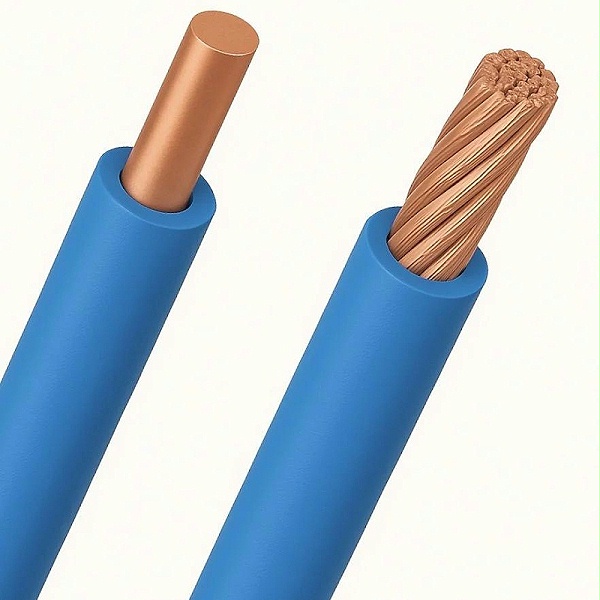
Fine-stranded copper conductors
Compared with solid conductors or less flexible stranded constructions, fine-stranded conductors generally offer better flexibility for dynamic applications.
However, finer strands alone do not guarantee a long service life. Strand diameter, conductor construction, material quality, and manufacturing consistency all matter.
Consistent conductor quality
Uneven strand construction, poor conductor compaction, or inconsistent processing can affect the cable's mechanical performance.
For applications involving thousands or even millions of movement cycles, conductor design should be evaluated as part of the complete cable construction.
The key question is not simply whether the conductor is flexible, but whether it can maintain its electrical integrity under repeated mechanical stress.
3. Pay Attention to Insulation and Core Assembly
Even when the conductor is suitable for dynamic applications, the cable may still fail if its insulation and internal construction are poorly designed.
During continuous bending, individual cores move and interact with one another.
If the internal structure is not properly engineered, several problems may occur:
Excessive friction between individual cores
Insulation wear caused by repeated movement
Uneven mechanical stress across the cable
Deformation of the cable structure
Increased risk of internal conductor damage
A well-designed dynamic cable needs more than flexible individual components.
Its internal structure must work together to distribute mechanical stress and maintain stability during repeated movement.
Depending on the application, factors such as core arrangement, lay length, fillers, wrapping materials, and shielding construction should all be considered.
This is particularly important for multi-core drag chain cables and control cables used in automated machinery.
4. Choose the Right Outer Sheath Material
The outer sheath is the first line of protection against the operating environment.
But for continuous-motion applications, its role goes beyond protecting the internal conductors.
It must also withstand repeated bending, friction, abrasion, and environmental exposure.
Different sheath materials offer different advantages.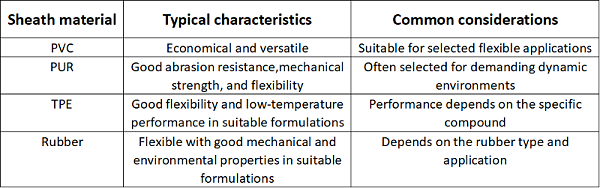
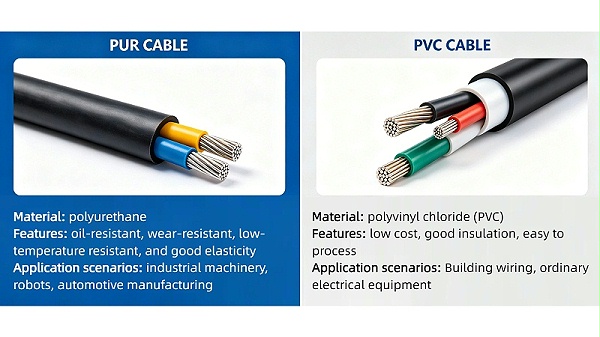
For applications involving frequent movement, friction, or mechanical stress, PUR is often worth considering.
However, no single material is suitable for every application.
Oil exposure, temperature, UV radiation, chemical contact, installation conditions, and required service life should all be evaluated before selecting the sheath material.
The best cable is not necessarily the one with the most expensive material. It is the one whose material properties match the actual operating conditions.
5. Check the Minimum Bending Radius and Actual Motion Conditions
A cable may be advertised as highly flexible, but that does not mean it can withstand any bending radius or movement speed.
The minimum bending radius is a critical parameter when selecting cables for dynamic applications.
It indicates how tightly a cable can be bent under specified conditions without compromising its performance.
However, engineers should not evaluate bending radius in isolation.
Other important factors include:
Travel distance
Movement speed
Acceleration and deceleration
Number of bending cycles
Installation orientation
Cable carrier design
Operating temperature
For example, a cable installed in a drag chain may experience continuous back-and-forth bending.
A cable installed on a robotic arm may experience more complex movements involving multiple axes and torsion.
These are different mechanical conditions and may require different cable constructions.
Before selecting a cable, understand how it will actually move inside the equipment.
A cable designed for a standard drag chain application should not automatically be assumed suitable for robotic torsion applications.
6. Do Not Overlook Shielding Performance
In modern automation systems, power cables and signal cables frequently operate close to motors, drives, sensors, and control equipment.
Electrical interference can affect signal transmission and system reliability.
Shielding is therefore an important consideration for many dynamic industrial cables.
However, a shielded cable designed for stationary installation may not necessarily be suitable for continuous movement.
During repeated bending, shielding materials and structures are also exposed to mechanical stress.
Depending on the cable design, unsuitable shielding construction may lead to:
Shield deformation
Reduced shielding effectiveness
Increased mechanical wear
Premature failure under repeated movement
For dynamic applications, buyers should evaluate both electrical shielding performance and mechanical durability.
The shielding structure should be appropriate for the expected bending conditions and movement cycles.
7. Ask for Evidence: Has the Cable Been Tested for Dynamic Applications?
This is where technical specifications become particularly important.
A cable may be described as flexible, high-flex, or suitable for industrial automation.
But how can you verify whether these claims are supported by actual performance?
Ask the manufacturer about relevant testing and validation.
Depending on the application, useful information may include:
Flexing tests
These evaluate cable performance under repeated bending conditions.
Drag chain tests
These assess the cable's behavior during repeated movement within a cable carrier.
Torsion tests
These are particularly relevant to robotic cables and applications involving rotational movement.
Abrasion resistance tests
These help evaluate the outer sheath's ability to withstand mechanical friction.
Electrical performance tests
These verify whether the cable maintains its required electrical characteristics.
When reviewing test results, pay attention to the actual test conditions:
Bending radius
Travel distance
Movement speed
Test temperature
Number of cycles
Cable installation method
A statement such as "tested for millions of cycles" is not enough on its own.
Without knowing the testing conditions, it is difficult to determine whether the result is relevant to your application.
A reliable cable supplier should be able to explain the testing method and provide applicable technical documentation.
8. Match the Cable Construction to the Application
Not every dynamic application requires the same cable design.
Choosing a cable based on its product name alone can lead to unnecessary costs or premature failure.
Here are some common examples:
Drag Chain Systems
Typical applications: CNC machines, automated production lines, packaging machinery, and material handling systems.
These applications generally require cables capable of repeated bending, with suitable conductor stranding, internal construction, and abrasion-resistant sheaths.
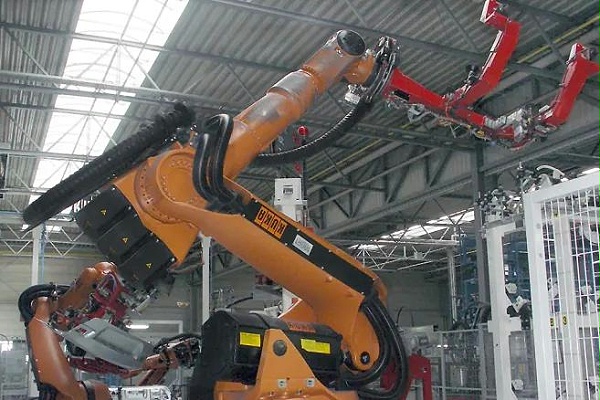
Robotic Systems
Typical applications: Industrial robots, robotic arms, automated loading and unloading equipment.
These applications may involve multi-axis movement, repeated bending, and torsional stress. Specially designed robotic cables may be necessary.
Servo Motor Systems
Typical applications: CNC equipment, motion control systems, and automated machinery.
Servo cables need to meet the electrical and mechanical requirements of the drive system, including appropriate conductor sizing, shielding, and dynamic performance.
Reeling and Moving Equipment
Typical applications: Cranes, port machinery, and material handling equipment.
These applications may involve long travel distances, tensile stress, and repeated winding or unwinding. Cable construction must be selected according to the actual operating conditions.
The important principle is simple:
Select a cable based on how it moves, not just where it is installed.
9. A Practical Checklist Before Purchasing Continuous-Motion Cable
Before placing an order, industrial cable buyers and engineers should confirm several key points with their suppliers.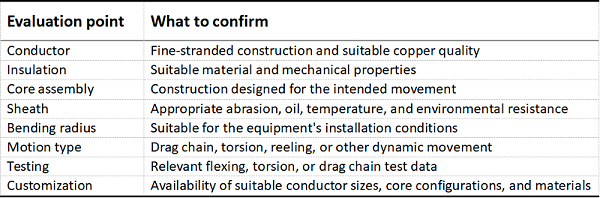
If a supplier cannot explain how its cable construction addresses your specific movement conditions, it may be worth asking more questions before making a purchasing decision.
Looking for reliable industrial cable solutions?
AEIN Cable has over 14 years of experience in manufacturing:
• UL CMP Plenum Cable
• Servo Cable
• Drag Chain Cable
• Robot Cable
• Continuous Flex Cable
Visit https://www.aein-wirecable.com to explore our products and technical resources.