
In modern industrial automation systems, motors are everywhere — from CNC machines and robotic arms to packaging equipment and production lines.
But behind every high-performance motor system, there is a critical component that is often overlooked: the cable connecting the motor and the control system.
Many engineers ask:
"Can I use a standard motor cable instead of a servo cable?"
At first glance, servo cables and motor cables may look almost identical. Both transmit power, both connect motors, and both are available with shielding options.
However, they are designed for completely different working environments.
Choosing the wrong cable can lead to:
• Signal interferenceSo, what exactly is the difference between a servo cable and a motor cable?
Let's take a closer look.
A motor cable is mainly designed to transmit electrical power from a drive or power source to an electric motor.
Its primary function is simple:
Deliver stable power safely and efficiently.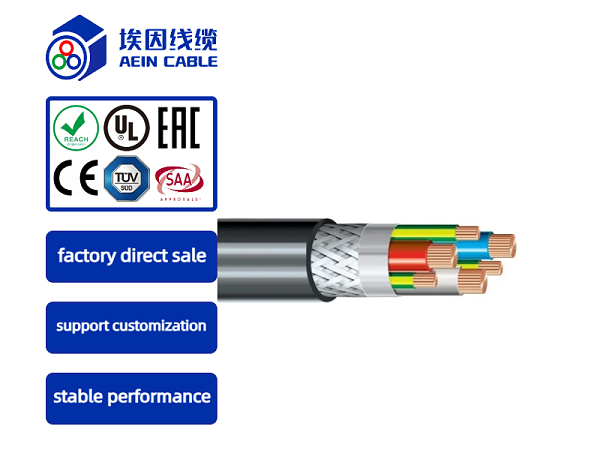
Typical applications include:
• Industrial motorsA standard motor cable usually contains:
• Conductors for power transmissionThe main design priorities are:
✅ High voltage resistance
✅ Current carrying capability
✅ Mechanical protection
✅ Long-term durability
For applications where the motor operates in a fixed position, a standard motor cable is often sufficient.
2. What Is a Servo Cable?
A servo cable is specifically designed for servo motor systems used in precision motion control applications.
Unlike traditional motors, servo motors require more than just power.
They need: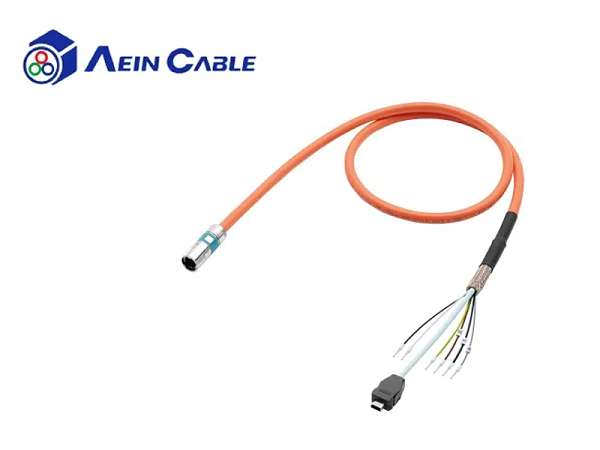
A typical servo cable may combine:
• Power conductorsServo systems rely heavily on feedback.
For example, an encoder continuously sends information about:
• Motor positionThe servo drive uses this information to adjust motor movement in real time.
Therefore, servo cables must provide both:
Power transmission + Signal integrity
3. Key Differences Between Servo Cable and Motor Cable
This is the biggest difference.
A motor cable mainly carries electrical power.
A servo cable often carries:
• PowerBecause these signals are sensitive, servo cables require better shielding and interference protection.
In high-precision automation equipment, even small electrical noise can cause:
• Position errorsServo systems usually operate near:
• Frequency convertersThese devices generate electromagnetic interference (EMI).
A high-quality servo cable normally includes:
• Overall shieldingThis helps maintain stable communication between the motor and controller.
Motor cables may also have shielding, but the requirements are usually less demanding.
Many servo motors are installed on moving equipment.
Examples:
• Robot armsThe cable may experience:
• Continuous bendingServo cables are often manufactured with:
• Fine-stranded copper conductorsSome servo cables can withstand millions of bending cycles.
A standard motor cable, however, may fail quickly under continuous motion.
A traditional motor cable usually has a simpler structure:
Power conductors → Insulation → Jacket
A servo cable may have a more complex structure:
Power cores
• Control coresThis additional structure allows servo cables to handle complex motion control requirements.
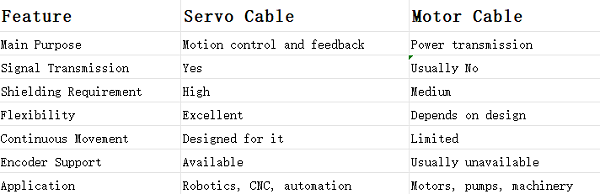
4. Servo Cable vs Motor Cable: Comparison Table
5. Can You Replace a Servo Cable with a Motor Cable?
The short answer:
Sometimes yes, but often no.
For a simple fixed motor application, a motor cable may work perfectly.
However, replacing a servo cable with a standard motor cable in a precision automation system can create serious problems.
Possible consequences include:
Without proper shielding, encoder signals may become unstable.
The result:
• Incorrect positioning
A cable failure in an automated production line can stop an entire process.
The cost of downtime is usually much higher than the cost difference between cable types.
A non-flexible cable installed in a moving application may experience:
• Conductor breakage
6. How to Choose the Right Cable for Your Application
Before selecting a cable, consider these questions:
Fixed installation:
→ Motor cable may be enough.
Continuous movement:
→ Choose servo cable or high-flex cable.
If your motor uses:
• Encoder feedbackA servo cable is usually the correct choice.
For applications near:
• Servo drivesA shielded servo cable provides better reliability.
7. Why Cable Selection Matters in Industrial Automation
A cable is not just a connection between components.
In an automation system, the cable directly affects:
• Machine accuracyA high-quality cable helps prevent unexpected failures and ensures stable operation over years of service.
At AEIN Cable, we focus on developing industrial cables designed for demanding environments, including:
• Servo cablesOur goal is to provide reliable cable solutions that help manufacturers improve system performance and reduce maintenance costs.
Final Thoughts: Servo Cable or Motor Cable?The difference between servo cable and motor cable is not only about appearance.
The real difference lies in:
• Signal requirementsIf your system only needs power transmission, a motor cable may be enough.
But if your application requires precision motion control, feedback communication, and continuous movement, a servo cable is the safer choice.
Choosing the right cable today can prevent costly failures tomorrow.
Looking for reliable industrial cable solutions?
AEIN Cable has over 14 years of experience in manufacturing: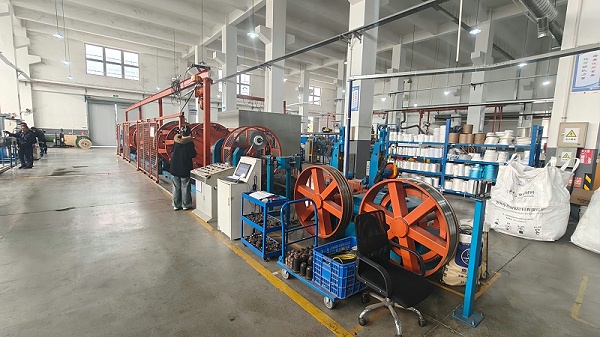
• UL CMP Plenum Cable
• Servo Cable
• Drag Chain Cable
• Robot Cable
• Continuous Flex Cable
Visit https://www.aein-wirecable.com to explore our products and technical resources.