
1. What Does a Cable Jacket Actually Do?
A cable jacket is the outermost protective layer of a cable. It surrounds the insulated conductors and helps protect the cable from external conditions.
Depending on the application, a cable jacket may need to resist: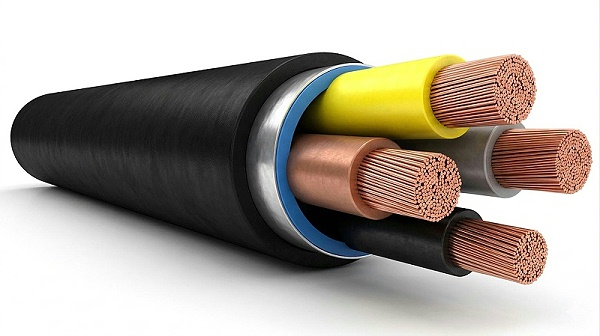
Mechanical wear and abrasion
Oil, grease, and chemicals
Moisture and water
UV radiation and outdoor weather
High or low temperatures
Repeated bending and twisting
Think of the jacket as the cable's first line of defense.
A cable used inside a control cabinet has very different requirements from one installed on a moving industrial robot. The first may mainly need basic protection, while the second may face continuous movement, twisting, and mechanical stress.
This is why choosing a jacket based only on price or appearance can be a costly mistake.
2. Different Jacket Materials, Different Performance
Not all cable jackets are made from the same material. Each material has its own strengths and limitations.
Here are some commonly used cable jacket materials in industrial applications.
PVC – A Practical Choice for General Applications
PVC (Polyvinyl Chloride) is one of the most widely used cable jacket materials.
Why is it popular?
Cost-effective
Good electrical insulation properties
Available in different formulations
Suitable for many general indoor applications
Can provide flame-retardant performance when properly formulated and tested
PVC is commonly used in control cables, installation cables, and general-purpose industrial cables.
However, standard PVC is not necessarily suitable for every demanding environment. Applications involving continuous movement, aggressive oils, or extreme temperatures may require a different material or a specially formulated PVC compound.
PUR – Designed for Demanding Industrial Environments
PUR (Polyurethane) is widely used in industrial cables that face mechanical stress.
Its main advantages include:
Excellent abrasion resistance
Good tear resistance
Good flexibility
Resistance to many oils and greases, depending on the formulation
Suitability for many dynamic applications
PUR jackets are commonly found in drag chain cables, robot cables, and other industrial cables exposed to frequent movement.
For example, a cable installed on an automated production line may bend thousands of times during operation. A suitable PUR jacket can help protect it against repeated mechanical wear.
However, PUR is not automatically the best solution for every application. Chemical compatibility, temperature range, hydrolysis resistance, and other requirements should also be considered.
TPE – Flexible Performance Across Temperature Changes
TPE (Thermoplastic Elastomer) combines properties commonly associated with rubber and thermoplastics.
Depending on the formulation, TPE jackets can offer:
Good flexibility
Resistance to a wide temperature range
Good low-temperature performance
Resistance to certain environmental conditions
TPE is used in various flexible industrial cables, especially where flexibility and temperature performance are important.
Its actual performance depends on the specific compound, so always check the manufacturer's technical specifications.
Rubber – Suitable for Certain Harsh Working Conditions
Rubber-based materials are also widely used in industrial cable manufacturing.
Depending on the rubber type and formulation, they can provide: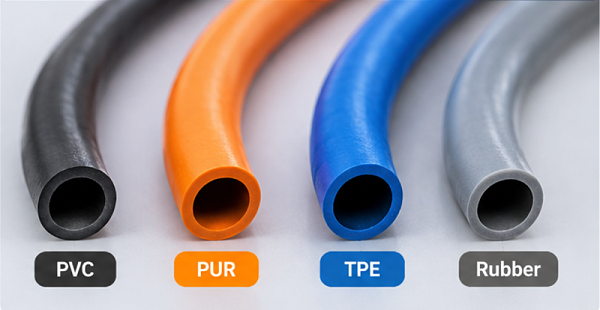
Good flexibility
Good resistance to mechanical stress
Suitable performance in certain outdoor environments
Resistance to heat and weathering in selected applications
Rubber cables are often used in equipment, machinery, and applications requiring robust cable construction.
The key is to select the right rubber compound for the actual working conditions.
3. Five Common Mistakes When Choosing a Cable Jacket
Even experienced cable buyers can overlook some important details.
Here are five common mistakes worth avoiding.
Mistake 1: Choosing Based on Price Alone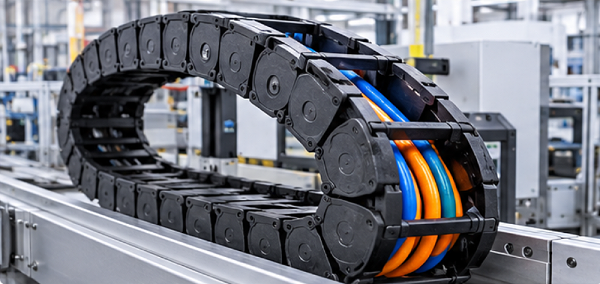
A cheaper cable may look like a good deal at first.
But if its jacket wears out quickly, the cost of replacement, labor, and equipment downtime can easily exceed the initial savings.
A better approach is to consider the total cost over the cable's expected service life, not just the purchase price.
Mistake 2: Ignoring Oil and Chemical Exposure
Not every cable jacket can withstand contact with industrial oils, coolants, cleaning agents, or chemicals.
For example, a cable installed near a machine tool may be exposed to cutting fluids or lubricants every day.
If the jacket material is incompatible with these substances, it may swell, soften, crack, or lose its protective properties.
Before selecting a cable, identify the actual substances it may come into contact with and check the material's chemical resistance.
Mistake 3: Using a General-Purpose Cable in a Moving Application
A cable that performs well in a fixed installation may fail when used in a moving system.
Inside a drag chain, cables experience repeated bending and mechanical stress. In robotic applications, they may also experience twisting.
These conditions require more than ordinary flexibility.
The cable construction, conductor stranding, insulation, jacket material, and bending or torsion performance all need to match the application.
Mistake 4: Overlooking Temperature Conditions
Temperature has a direct impact on cable jacket performance.
At low temperatures, some materials become harder and less flexible. At high temperatures, certain materials may soften or age faster.
If a cable operates outdoors, near heating equipment, or in a cold storage facility, its temperature requirements should be checked carefully.
Do not assume that a material suitable for room-temperature operation will perform equally well in extreme conditions.
Mistake 5: Confusing Flame Retardancy with Environmental Resistance
A cable jacket may have good flame-retardant performance, but that does not automatically mean it is oil-resistant, UV-resistant, or suitable for outdoor use.
These are different performance requirements.
For example, EN 60332-1-2 is a standard for testing the vertical flame propagation of a single insulated wire or cable. Passing this test does not prove that the cable can withstand continuous movement or exposure to industrial chemicals.
Always evaluate each required property separately.
4. How to Choose the Right Cable Jacket for Your Application
Instead of starting with the material name, start with the working environment.
Here are five questions to ask before making a decision.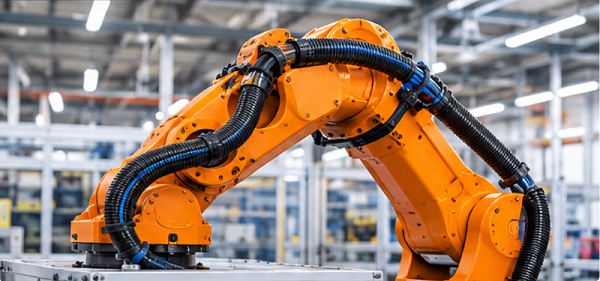
1. Is the cable installed indoors or outdoors?
Outdoor cables may need additional protection against sunlight, moisture, and weather changes.
2. Will the cable move continuously?
For drag chain systems, robotic equipment, and automated machinery, dynamic performance is essential.
3. Will the cable come into contact with oil or chemicals?
Identify the specific substances and check their compatibility with the jacket material.
4. What is the operating temperature range?
Consider both the minimum and maximum temperatures during actual operation.
5. Are there special safety or certification requirements?
Check whether the project requires specific flame tests, environmental compliance, or product certifications.
Once these questions are answered, it becomes much easier to narrow down the suitable cable construction.
5. The Cable Jacket Is Only One Part of the Complete Cable Design
There is another important point that cable buyers should remember.
Even the right jacket material cannot guarantee good cable performance if the rest of the cable is poorly designed.
A reliable industrial cable depends on several factors working together:
Conductor structure and stranding
Insulation material and thickness
Shielding design, when required
Cable construction and flexibility
Outer jacket material
Manufacturing quality and testing
For example, a drag chain cable needs a construction designed for repeated movement. Simply replacing a standard PVC jacket with PUR does not automatically turn an ordinary cable into a high-flex cable.
The entire cable structure must be considered.
This is especially important for servo cables, encoder cables, robot cables, and continuous-flex cables, where electrical performance and mechanical durability must work together.
Looking for reliable industrial cable solutions?
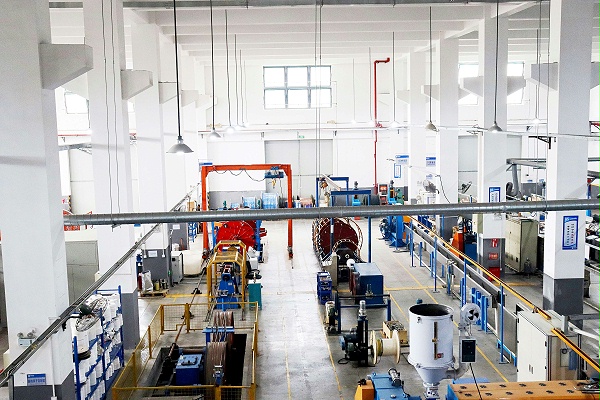
AEIN Cable has over 14 years of experience in manufacturing:
• UL CMP Plenum Cable
• Servo Cable
• Drag Chain Cable
• Robot Cable
• Continuous Flex Cable
Visit https://www.aein-wirecable.com to explore our products and technical resources.
5 Questions to Answer Before Choosing a Cable for a Moving Machine
The Wrong Cable Jacket Can Ruin an Otherwise Good Cable