
What Is a Drag Chain Cable?
A drag chain cable, also known as a continuous flex cable, high flex cable, or energy chain cable, is a flexible industrial cable designed to work inside cable carriers (drag chains) where continuous movement occurs.
Unlike conventional cables that are mainly designed for static installation, drag chain cables are engineered for dynamic applications where cables constantly move back and forth.
Typical applications include:
The main purpose of a drag chain cable is simple:
To provide reliable power, signal, and data transmission while surviving millions of bending cycles.
Why Can't Standard Cables Be Used in Drag Chains?
Many customers initially ask: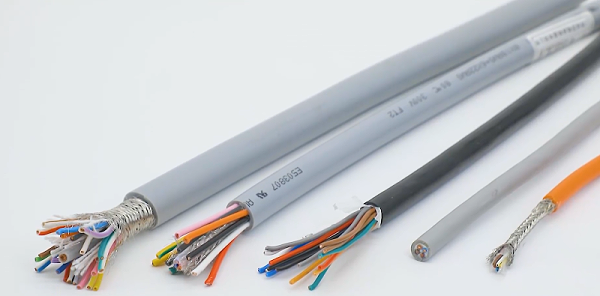
“Why can’t I just use a normal flexible cable?”
The answer is related to internal cable structure.
A standard cable may look flexible from the outside, but inside, its conductors and insulation materials are not designed for continuous movement.
When a normal cable repeatedly bends, several problems can occur:
1. Conductor Fatigue
Copper conductors inside the cable experience repeated mechanical stress.
After thousands of bending cycles, the copper strands may break, causing:
2. Insulation Cracking
The insulation and outer jacket of ordinary cables may become damaged after continuous movement.
This can lead to:
3. Cable Twisting and Deformation
In drag chain applications, cables need to move smoothly along a defined bending radius.
Without proper construction, cables may:
How Is a Drag Chain Cable Constructed?
A high-quality drag chain cable uses special materials and manufacturing techniques to improve flexibility and durability.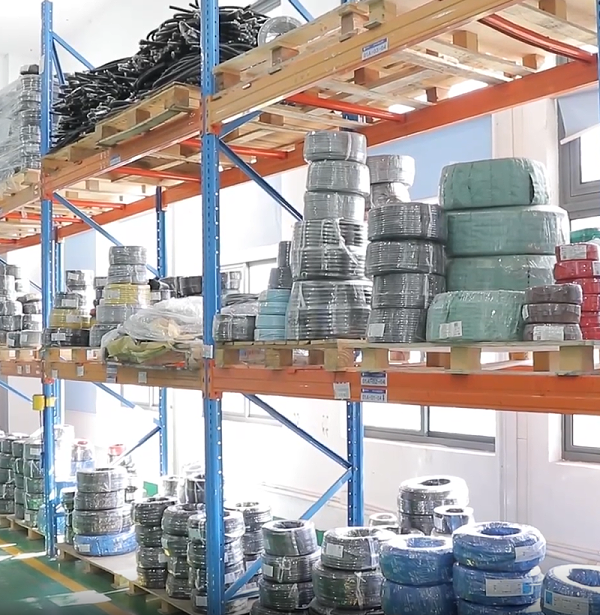
The main structural features include:
1. Fine-Stranded Copper Conductors
Drag chain cables usually use extra-fine stranded copper wires.
Compared with standard conductors, fine strands provide:
2. Special Insulation Materials
Common insulation materials include:
Different materials provide different advantages.
For example:
PVC drag chain cables
PUR drag chain cables
3. Optimized Shielding Design
For applications involving signal transmission, such as servo motors and encoder systems, electromagnetic interference (EMI) can affect machine performance.
Shielded drag chain cables help protect signals from interference and improve system stability.
4. Flexible Outer Jacket
The outer jacket protects the cable from:
A good jacket material helps extend cable lifetime in harsh environments.
Common Applications of Drag Chain Cables
Drag chain cables are widely used in industries where machines require continuous motion.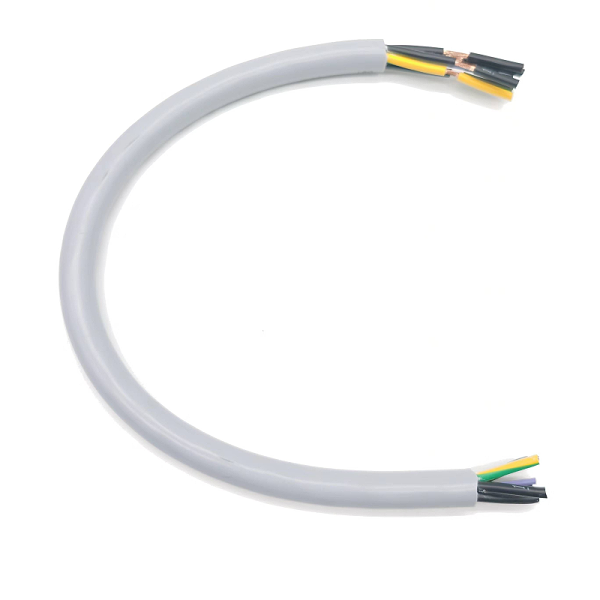
CNC Machines
CNC equipment requires precise movement and stable signal transmission.
Drag chain cables are commonly used for:
Industrial Robots
Robotic arms often perform thousands of movements every day.
Robot cables must withstand:
Automated Manufacturing Lines
Modern factories rely on automation systems that operate continuously.
Reliable cables help prevent:
Packaging Equipment
Packaging machines often require fast and repetitive movement.
Drag chain cables provide stable performance even under high-cycle operation.
How to Choose the Right Drag Chain Cable?
Choosing the correct cable depends on several factors.
1. Movement Type
Consider:
Different applications require different cable designs.
2. Bending Radius
Every cable has a minimum bending radius.
Using a cable beyond its recommended bending limit can significantly reduce service life.
3. Working Environment
Ask:
For harsh environments, PUR or specially designed industrial cables are often preferred.
4. Electrical Requirements
Different machines require different cable types:
Selecting the correct cable type ensures stable machine performance.
Drag Chain Cable vs Regular Flexible Cable
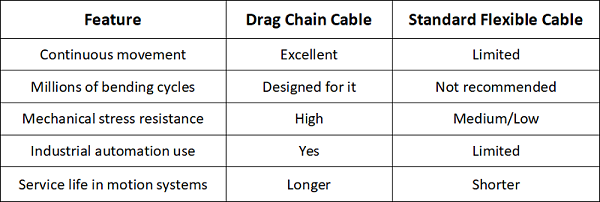
The difference may not always be visible from the outside, but internally, drag chain cables are built for a completely different purpose.
Why Cable Quality Matters in Industrial Automation
A cable failure may seem like a small problem.
However, in an automated production line, one damaged cable can cause:
This is why choosing the right cable from the beginning is often much cheaper than replacing failed cables later.
A reliable drag chain cable is not just a connection component — it is an important part of machine reliability.
Conclusion: Drag Chain Cable Is More Than Just a Flexible Cable
A drag chain cable is a specialized industrial cable designed for continuous movement applications.
Its advanced construction allows it to handle repeated bending, mechanical stress, and demanding industrial environments.
For automation equipment manufacturers and engineers, selecting the right drag chain cable can improve:
Looking for reliable industrial cable solutions?
AEIN Cable has over 14 years of experience in manufacturing: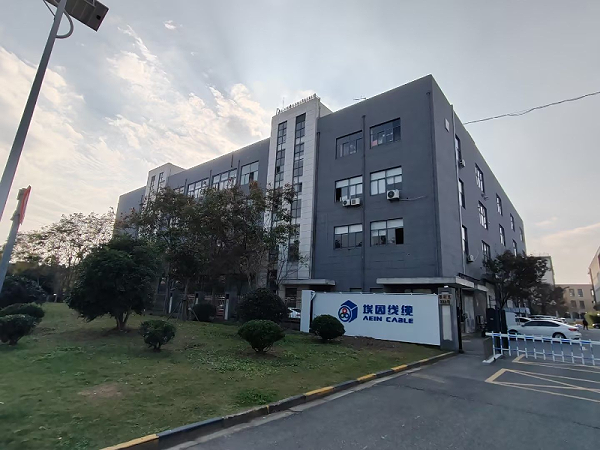
• UL CMP Plenum Cable
• Servo Cable
• Drag Chain Cable
• Robot Cable
• Continuous Flex Cable
Visit https://www.aein-wirecable.com to explore our products and technical resources.