
1.Understand the Role of a Servo Cable
Before choosing a servo cable, it is important to understand what makes it different from a standard motor cable.
A traditional motor cable mainly transfers electrical power.
A servo cable usually handles multiple functions:
Power transmission
Providing energy from the servo drive to the motor.
Feedback communication
Transmitting encoder signals that provide real-time information about:
Protection against interference
Maintaining signal stability in environments with:
Because servo systems require precise control, even small signal disturbances can affect machine accuracy.
2. Consider the Application Environment
The first question when selecting a servo cable is: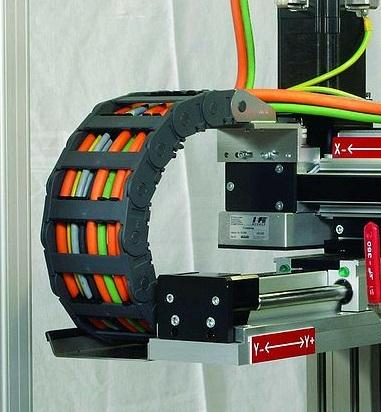
Where will the cable operate?
Different environments require different cable designs.
Fixed Installation Applications
If the servo motor and equipment remain stationary, the cable mainly needs:
A standard flexible servo cable may be sufficient.
Typical applications:
Dynamic Motion Applications
Many automation systems require continuous cable movement.
Examples:
In these applications, the cable experiences:
A standard cable may fail due to:
For dynamic applications, choose a high-flex servo cable designed for continuous movement.
3. Check Cable Flexibility and Bending Performance
Flexibility is one of the most important factors in industrial automation.
A servo cable used in a moving application should have:
Fine-stranded copper conductors
Smaller copper strands provide better flexibility and resistance to repeated bending.
Flexible insulation materials
Common materials include:
Among them, PUR jackets are widely used for demanding environments because they provide:
Cable Bending Radius
Every cable has a minimum bending radius.
Installing a cable below this limit may cause:
For robotic and drag chain applications, always check:
4. Evaluate Shielding Performance
Industrial automation environments are full of electromagnetic noise.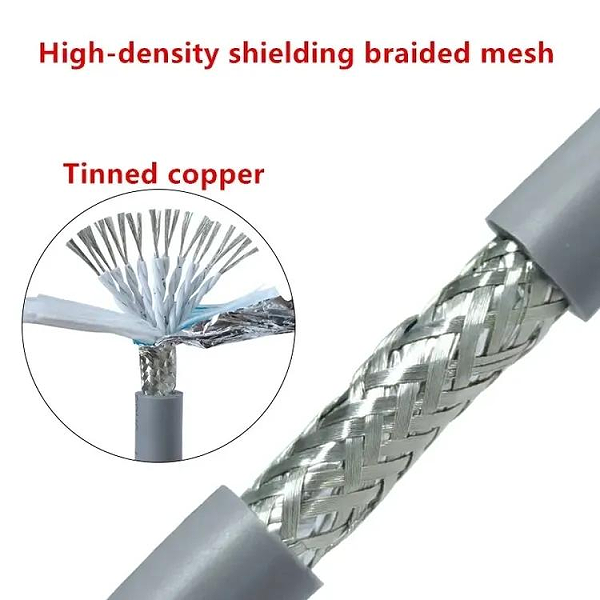
Common sources include:
Electromagnetic interference (EMI) can affect encoder signals and cause:
A high-quality servo cable typically includes shielding structures such as:
Overall shield
Protects the entire cable from external interference.
Individual pair shielding
Provides additional protection for sensitive signal wires.
Copper braid shielding
Improves grounding performance and mechanical protection.
For precision automation systems, better shielding usually means higher system reliability.
5. Match the Servo Cable Structure to Your Motor System
Not all servo cables have the same internal design.
Depending on the motor system, the cable may include: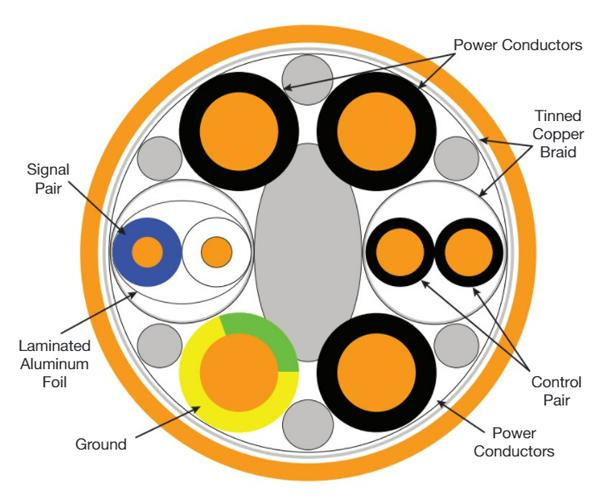
Power cores
Supply energy to the servo motor.
Brake wires
Control motor braking functions.
Encoder wires
Transmit feedback signals.
Additional communication wires
Support advanced servo systems.
Before purchasing, confirm:
A cable with the wrong structure may not perform correctly even if the size looks similar.
6. Select the Right Jacket Material
The outer jacket protects the cable from environmental conditions.
Different materials provide different advantages.
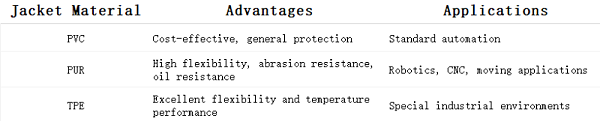
For harsh industrial applications, PUR servo cables are often preferred because they can withstand demanding working conditions.
7. Consider Temperature and Chemical Resistance
Industrial environments can expose cables to:
Before selecting a servo cable, check:
For example:
A CNC machine using cutting fluid requires a cable with strong oil and coolant resistance.
A robot operating in an automotive factory may require a cable designed for welding environments.
8. Servo Cable Selection Checklist
Before placing an order, ask these questions:
✅ Is the cable fixed or continuously moving?
✅ How many bending cycles are required?
✅ Does the system require encoder feedback?
✅ What level of shielding is needed?
✅ What temperature range will the cable experience?
✅ Is oil or chemical resistance required?
✅ What certifications are required?
These factors determine whether the cable can deliver long-term reliability.
Common Mistakes When Choosing Servo Cables
Mistake 1: Choosing Based Only on Price
A cheaper cable may reduce initial cost, but frequent failures can lead to:
The total cost of ownership is often much higher.
Mistake 2: Using Standard Motor Cable Instead of Servo Cable
Although they may look similar, they serve different purposes.
Motor cables focus on power transmission.
Servo cables must handle both:
Power + Precision feedback signals
Mistake 3: Ignoring Mechanical Requirements
A cable that works perfectly in a fixed installation may fail quickly in a moving application.
Always consider the actual operating conditions.
How AEIN Helps Industrial Automation Companies Choose the Right Servo Cable
Looking for reliable industrial cable solutions?
AEIN Cable has over 14 years of experience in manufacturing:
• UL CMP Plenum Cable
• Servo Cable
• Drag Chain Cable
• Robot Cable
• Continuous Flex Cable
Visit https://www.aein-wirecable.com to explore our products and technical resources.